BLOG PERSONAL TAX COMPANY TAXES, EXPENSES & RATES PAYROLL & PENSIONS ADVISORY & BUSINESS SUPPORT NEWS UPDATES GOVERNMENT SUPPORT

Rising energy costs, international conflict and the ongoing cost-of-living squeeze have left many households and businesses feeling the pressure.
The Chancellor’s Autumn Budget on 28 October aimed to offer some ‘breathing space’, with support for energy bills alongside a range of changes to tax and business costs.
But there are also changes to plan for, from higher tax rates on savings and property income to new rules for business owners and people completing Self Assessment.
We’ve picked out the announcements most likely to affect individuals, landlords and businesses, and what they could mean for you.
Energy bills and household support
The Budget included several measures aimed at easing pressure on household budgets.
These include:
-
£100 Household Energy Payment: eligible households in council tax bands A–D in England are due to receive a payment from January 2027.
-
Electricity VAT relief: the VAT cut is being extended to July 2027, with the government expecting it to reduce the annual energy price cap by around £50 in April 2027.
-
Fuel duty: the 5p cut and freeze will continue until 1 July 2027.
-
Standing charges: The government plans to remove standing charges from domestic gas bills in 2027, or as soon as possible afterwards. It has also committed to reforming electricity standing charges, with more details expected next year, although no timescale has been confirmed yet.
The support will not affect every household in the same way, and some of the longer-term changes still need to be implemented. For businesses, energy costs also remain an important factor when planning overheads, prices and cash flow.
Tax changes for individuals and landlords
Higher tax rates on savings and property income
From 6 April 2027, tax rates on savings and property income will increase to:
-
Basic rate: 24%
-
Higher rate: 44%
-
Additional rate: 49%
These increases build on changes announced in the previous Budget. They mean some landlords and savers could face a higher tax bill, even if their income stays the same.
For landlords already dealing with mortgage costs, repairs and other running expenses, it’s another reason to keep a close eye on profitability. The impact on savers will depend on how much taxable interest they receive and whether they can make use of tax-free allowances.
Trading Allowance rises to £3,000
From 6 April 2027, the Trading Allowance will increase from £1,000 to £3,000.
The allowance can cover qualifying income from small trading activities, such as a side business. The increase could make things simpler for people earning a modest amount alongside their main job, although other tax and reporting rules may still apply.
If you earn extra income outside your usual employment, it’s worth keeping records so you can check which rules apply to you.
Cash ISA allowance stays at £20,000
To counterbalance the tax increase on savings, there was at least some welcome news for savers: the planned reduction to the annual Cash ISA allowance has been cancelled, so the limit remains at £20,000 a year.
This means you can continue to save up to that amount in Cash ISAs without paying tax on the interest earned, subject to the usual ISA rules.
A new First Time Buyer ISA from 2029
A separate announcement was the planned introduction of a First Time Buyer ISA from April 2029, replacing the Lifetime ISA for new savers.
The new account will allow contributions of up to £4,000 a year, with a 25% government bonus towards an eligible first home worth up to £450,000. Unlike the Lifetime ISA, it will have no upper age limit.
Existing Lifetime ISA holders will be able to continue contributing to and using their accounts under the current rules. Effective immediately, the withdrawal charge for qualifying first-home purchases above the £450,000 property price cap will also fall from 25% to 20%.
These are changes for people planning ahead rather than immediate changes to how most people save. If you’re saving for your first home, it will be worth comparing the options as more details emerge.
What businesses need to know
National Minimum Wage and National Living Wage increases from April 2027
From 1 April 2027, both the National Living Wage and National Minimum Wage rates will increase by 3.9%. The National Living Wage for workers aged 21 and over will rise to £13.21 an hour, while the rates for younger workers and eligible apprentices will also increase.
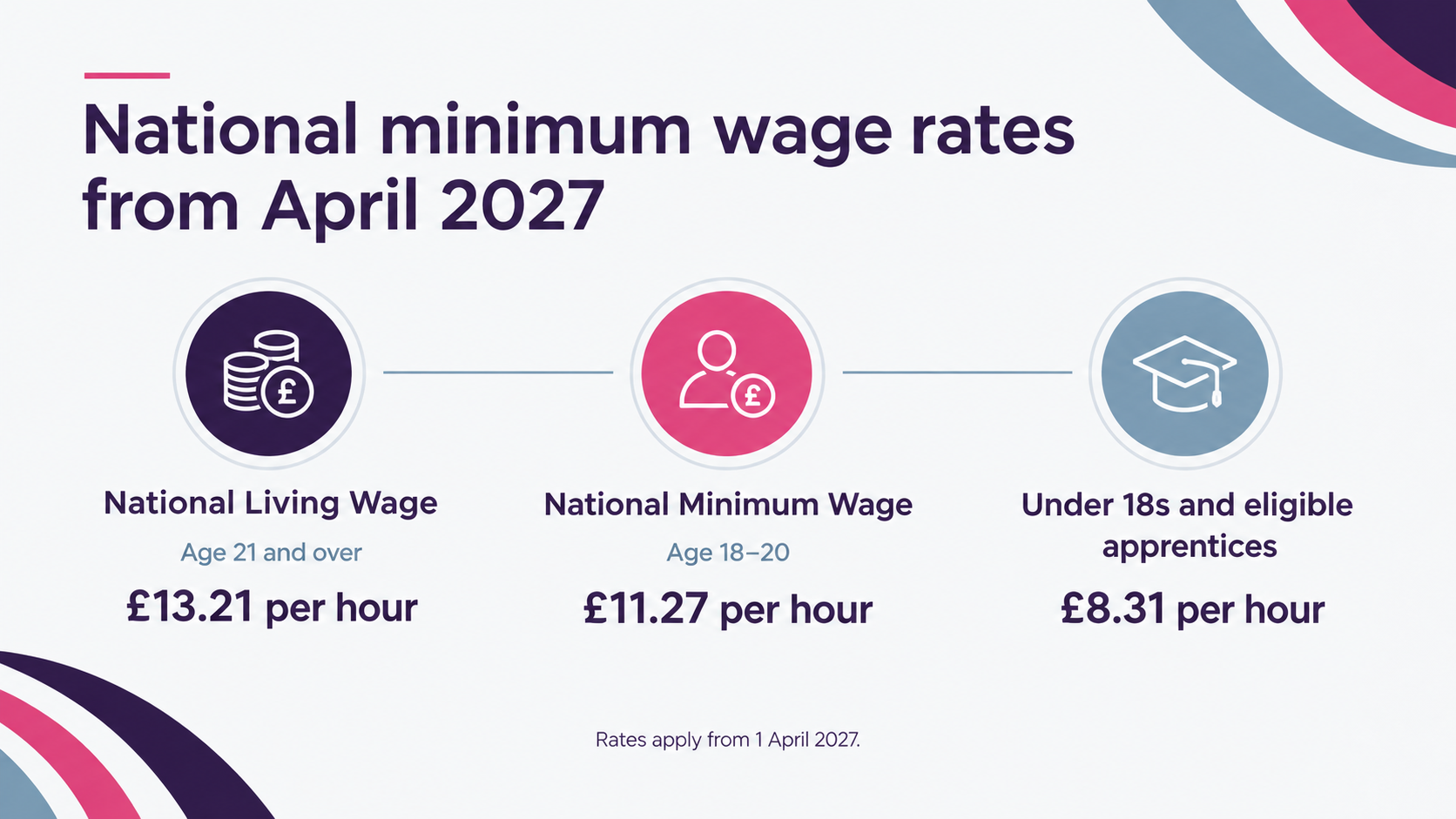
|
Rate |
From April 2026 |
From April 2027 |
Increase |
|
National Living Wage (21+) |
£12.71 |
£13.21 |
50p |
|
National Minimum Wage (18–20) |
£10.85 |
£11.27 |
42p |
|
National Minimum Wage (16–17) |
£8.00 |
£8.31 |
31p |
|
Apprentice rate |
£8.00 |
£8.31 |
31p |
For employers, higher wage rates can affect more than just the payroll total. They may also influence pricing, staffing budgets and the margins on products or services.
Building the new rates into your forecasts now can help avoid an unexpected squeeze on cash flow next year.
Business rates: help for retail, hospitality and leisure
Qualifying retail, hospitality and leisure properties in England will benefit from a two-year real-terms business rates freeze. Relief for eligible pubs, social clubs and most qualifying live music venues will increase from 15% to 35% from April 2027.
The Small Business Rate Relief thresholds will also rise, meaning more qualifying businesses could receive relief.
This should help some businesses manage their premises costs, but the impact will depend on the property, its rateable value and the reliefs available. A freeze does not necessarily mean every individual bill will stay exactly the same.
Capital allowances: changes for businesses investing in equipment
Businesses investing in qualifying equipment and other assets will see changes to capital allowances.
The first-year allowance will rise from 40% to 50% for qualifying expenditure from 1 January 2027. Meanwhile, the main writing-down allowance will fall from 14% to 12% from April 2027. Full expensing will remain available.
In simple terms, capital allowances determine how quickly businesses can claim tax relief on qualifying investment costs. The right approach will depend on the asset, the timing of the purchase and the allowances available.
If you’re planning a significant investment, speak to your accountant before committing. The timing may affect the relief available, but it’s important to consider the wider commercial benefits too.
Business Asset Disposal Relief: a lower lifetime limit
Business Asset Disposal Relief (BADR) can reduce the Capital Gains Tax payable when an eligible business owner sells all or part of their business.
From 6 April 2027, the lifetime limit on qualifying gains will fall from £1 million to £500,000, with the qualifying tax rate set at 18%.
For business owners considering a sale or exit, this could make a significant difference to the tax bill. It’s worth reviewing your plans early rather than leaving the tax implications until a sale is already under way.
New Founders’ Relief for qualifying entrepreneurs
Alongside the BADR changes, the Budget announced a new Founders’ Relief, offering a 10% Capital Gains Tax rate on up to £10 million of qualifying lifetime gains from 6 April 2027.
The relief is aimed at qualifying founders and significant early investors in high-growth, innovative companies. It comes with specific eligibility conditions, and the government has launched a technical consultation on how it will work in practice.
This isn’t a general tax break for everyone who owns a business, but it could be valuable for eligible entrepreneurs planning for the longer term. The final rules will be important, so anyone who thinks they may qualify should keep an eye on the details as they develop.
More generous employee share schemes
The Budget also announced changes to the Company Share Option Plan, which is being expanded and renamed EMI2.
From 6 April 2027, the individual option limit will increase from £60,000 to £120,000, and the exercise period will extend to 15 years.
For growing businesses, share schemes can be one way to attract and retain key employees by giving them a stake in the company’s future success. The changes may make this option more useful for some employers, although eligibility requirements will still apply.
Making Tax Digital and changes to paying tax
Making Tax Digital for Income Tax: the rollout continues
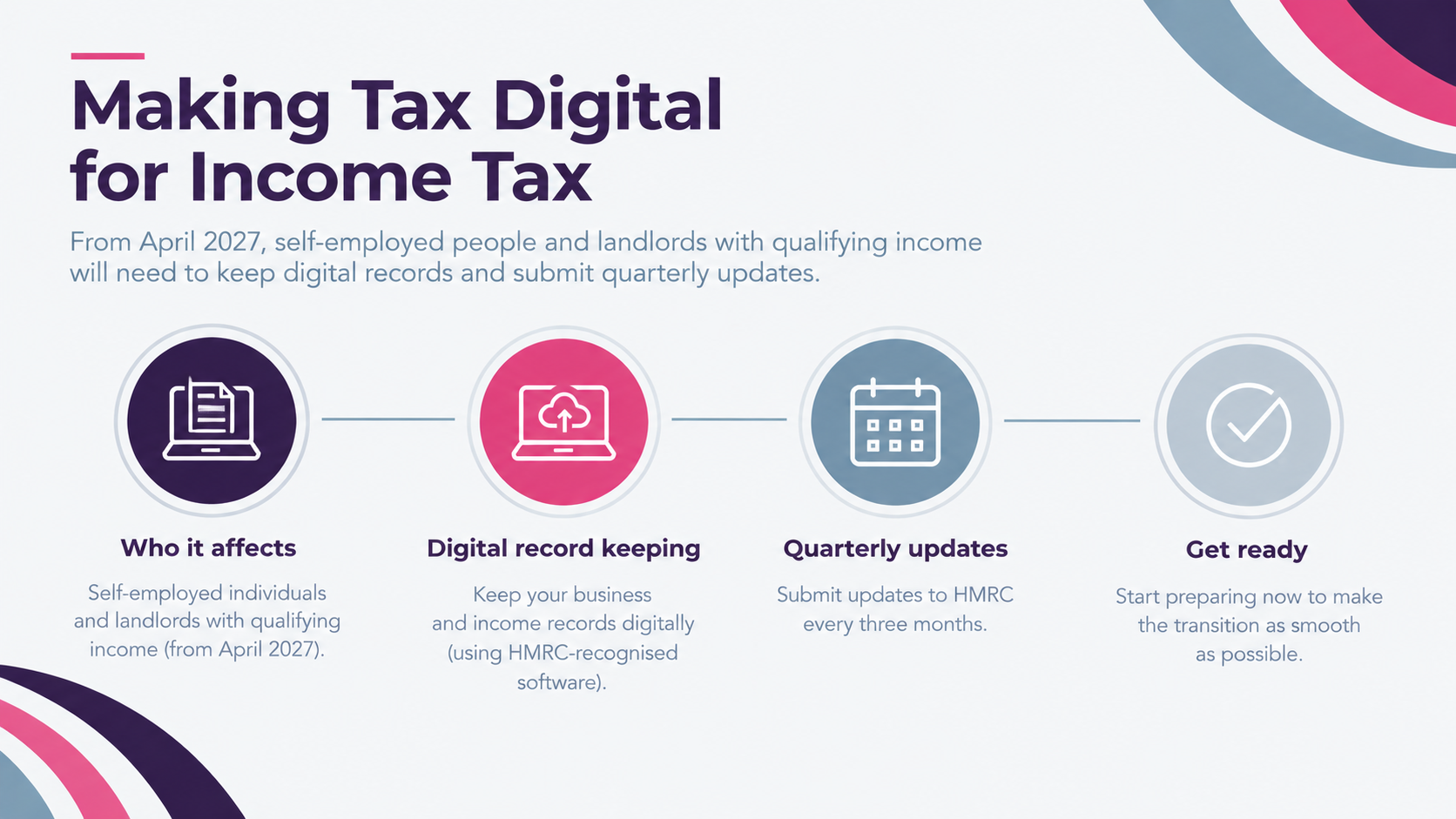
The Budget confirmed that the next phase of Making Tax Digital for Income Tax will go ahead as planned in April 2027, affecting sole traders and landlords with qualifying income over £30,000.
There will also be a penalty easement for people joining in April 2027: they will not receive penalty points for late submission of their first four quarterly updates for the 2027/28 tax year.
This is a change to an existing programme, rather than a new tax requirement announced in the Budget. If you’re a sole trader or landlord who may be affected, it’s still important to check when the rules apply to you and make sure your record-keeping and software are ready.
Self Assessment: more regular payments from 2029
One of the more significant changes for people who pay tax through Self Assessment is planned for April 2029.
Taxpayers who currently make Payments on Account will move to smaller, more regular payments towards their tax bill throughout the year, bringing payments closer to when the income is earned.
The government says the aim is to make tax bills easier to budget for and reduce the risk of people falling behind on payments. However, the change is about when tax is paid, not how much tax is owed.
The exact payment frequency is still to be decided. Payments will continue to be based on the previous year’s tax, and people will still need to submit their Self Assessment tax return by 31 January. There will also be a transition year, so it will be important to understand how the new arrangements affect your cash flow.
If you currently make Payments on Account, this is one to keep on your radar well ahead of 2029.
Mandatory VAT e-invoicing from April 2029
The government plans to require VAT invoices to be issued in a specified electronic format from 1 April 2029. Further details of the technical requirements are expected by April 2028.
This is a future change, so businesses don’t need to overhaul their systems overnight. However, it is worth keeping up to date with the requirements and considering whether your current invoicing processes will be suitable.
New VAT rules for online marketplaces
From October 2027, online marketplaces will be required to collect VAT on qualifying sales made through their platforms by UK businesses, subject to the rules and exemptions. The measure includes a £90,000 annual sales threshold per platform.
For businesses selling through third-party marketplaces, it will be important to understand how the changes affect VAT responsibilities and how transactions are handled.
Our take: the details matter
The Budget offers some welcome support, particularly with energy costs and business rates. It also creates opportunities for some businesses, while introducing changes that could increase costs or affect future plans.
The higher tax rates on savings income may be a concern for some people. After years of being encouraged to save and build financial security, it’s understandable that some may feel frustrated by paying more tax on the returns. The impact will depend on individual circumstances, including how much taxable interest they earn.
As ever, there’s no single verdict that applies to everyone. The important thing is to understand which changes affect you, when they take effect and whether they should influence your plans.
Autumn Budget 2026: your action list
You don’t need to react to every announcement straight away. Start with the changes most relevant to your circumstances:
-
Review your tax position: check how the future savings and property income rates could affect you.
-
Revisit business plans: if you’re investing in equipment, considering a sale or looking at employee share schemes, review the tax implications and timelines before making commitments.
-
Update your budgets: factor in wage increases, operating costs and any changes to your expected tax payments.
-
Check your digital tax readiness: if Making Tax Digital applies to you, make sure your records and software are ready.
-
Plan ahead for Self Assessment: if you make Payments on Account, keep the April 2029 changes in mind and watch for further details.
-
Keep future deadlines on your radar: e-invoicing and marketplace VAT are not immediate changes, but they will need attention as implementation approaches.
Need help navigating the changes?
Tax rules can be complicated, and the effect of a Budget announcement often depends on your wider financial position. If you’re unsure what the changes mean for you or your business, speaking to your accountant early can help you plan with confidence.